|
During the 14th Five-Year Plan (FYP) period (2021-2025), China's science and technology sector underwent a remarkable transformation, characterized by substantially increased investment and a stream of significant achievements. The nation made decisive strides from catching up to pacing the world in numerous high-tech fields, firmly embedding innovation as the primary driver of its high-quality development.
? A Foundation of Robust Investment
The "14th Five-Year Plan" period saw an unprecedented commitment to research and development (R&D) funding, which served as the bedrock for its scientific and technological progress.
Surge in R&D Expenditure: In 2024, China's total R&D spending exceeded 3.6 trillion yuan, a 48% increase from 2020 . This massive investment propelled China's R&D intensity (the ratio of R&D spending to GDP) from 2.41% at the end of the "13th Five-Year Plan" to 2.68% in 2024, surpassing the average level of European Union countries . This R&D expenditure scale has consistently ranked second in the world .
Strategic Government Funding: The national financial expenditure on science and technology during this period was projected to reach 5.5 trillion yuan, a 34% growth compared to the "13th Five-Year Plan" period . A significant portion was strategically directed toward basic research, with cumulative investment in this area hitting 730 billion yuan, representing an average annual growth rate of 12.3% .
? High-Profile Achievements and Breakthroughs
Strategic, sustained investment yielded impressive returns, with China achieving a series of landmark breakthroughs that captured global attention.
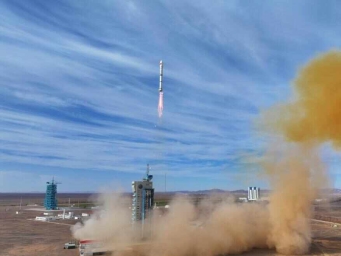
Aerospace and Deep Space Exploration: Major projects included the completion and operation of the Tiangong space station and the Chang'e-6 mission, which achieved the world's first sample return from the far side of the moon .
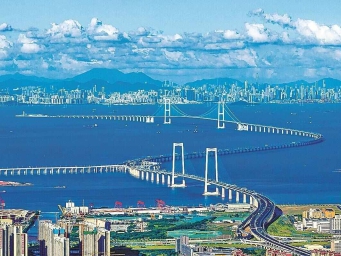
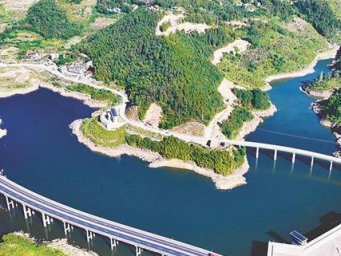
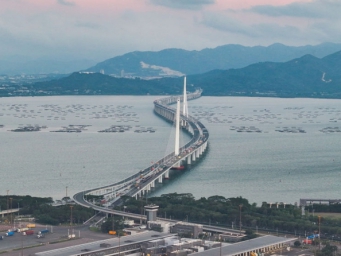
Advanced Transportation and Engineering: The period saw the development of an engineering prototype of a 600 km/h high-speed maglev train , the successful commercial operation of the C919 passenger jet , and the launch of key projects like China's first domestically built large cruise ship, Adora Magic City .
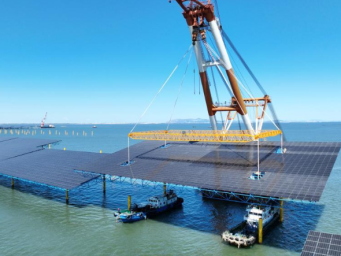
Cutting-Edge Research and Energy: Breakthroughs were reported in frontier fields such as quantum technology, life sciences, and material science . The world's first fourth-generation nuclear power plant was connected to the grid at Shidaowan .
? Integration of Innovation and Industry
A defining feature of this period was the accelerated fusion of scientific innovation with industrial upgrading, leading to the rapid rise of strategic emerging industries.
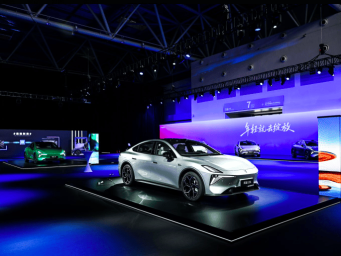
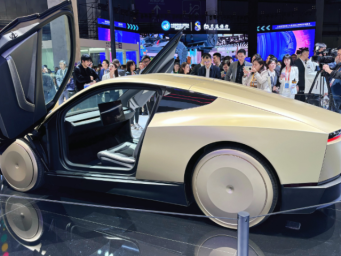
Rise of Strategic Industries: Industries like new energy vehicles (NEVs) experienced explosive growth, with production increasing more than eightfold over five years to over 13 million vehicles in 2024, establishing China as the global leader in this sector .
Thriving High-Tech Sector: The value-added of large-scale high-tech manufacturing grew by 42% compared to the end of the "13th Five-Year Plan" . The number of high-tech enterprises surged by 83% from 2020 to exceed 500,000 . The artificial intelligence sector, in particular, boomed, with the number of AI enterprises growing from 1,400 to over 5,000, equivalent to a new company being founded approximately every 11 hours .
Enhanced National Innovation Capacity: This industrial and scientific progress was reflected in global rankings. China's position on the National Comprehensive Innovation Capacity index climbed from 14th in 2020 to 10th in 2024 .
? A Supportive Ecosystem for Innovation
Beyond direct funding, the government implemented a multi-faceted policy framework designed to stimulate innovation across the board, particularly within enterprises.
Empowering and Reducing Burdens on Enterprises: A series of fiscal and tax policies were rolled out to strengthen the role of enterprises as innovation actors. This included:
Cultivating 14,600 specialized and sophisticated "Little Giant" enterprises .
Implementing 3.6 trillion yuan in new tax cuts and fee reductions for technological innovation and advanced manufacturing .
Using government-financed credit guarantees to support over 300,000 small and medium-sized tech firms in obtaining approximately 800 billion yuan in loans, with the average guarantee fee falling below 1% .
Reforming the Science System: Reforms such as the "roll out the list and take command" mechanism and the "dry system" for funding management gave scientists greater autonomy over research direction and经费使用 . Deeper international collaboration, with participation in over 60 international mega-science projects, further integrated China into the global scientific community .
The 14th Five-Year Plan period was a decisive phase in China's journey toward becoming a scientific and technological powerhouse. Through strategic investment, systemic reforms, and a focus on integrating innovation with real-world applications, China has not only enhanced its own technological capabilities but has also positioned itself as a significant contributor to global scientific progress.
I hope this article provides a clear overview. If you need more detailed information on a specific sector, such as high-speed rail or AI, feel free to ask
|
 |周边二手车|手机版|标签|xml|txt|新闻魔笔科技XinWen.MoBi - 海量语音新闻!
( 粤ICP备2024355322号-1|
|周边二手车|手机版|标签|xml|txt|新闻魔笔科技XinWen.MoBi - 海量语音新闻!
( 粤ICP备2024355322号-1| 粤公网安备44090202001230号 )|网站地图